
Three Weeks Ayurveda and Massage Training in Nepal
Welcome to the Three Weeks Ayurveda and Massage Training in Nepal at Nepal Meditation Home, a carefully designed residential program that integrates ancient Ayurvedic wisdom, hands-on massage therapy, yoga, and meditation into a living, experiential learning journey. This training has been meticulously structured to meet the diverse needs and objectives of modern wellness seekers while preserving the spiritual and traditional roots of Ayurveda. Our approach ensures that students not only learn Ayurvedic principles intellectually, but also apply them practically and adopt them as a way of life. As a complete and authentic Ayurveda massage training in Nepal, this program emphasizes self-healing first, followed by professional skill development, allowing learning to be both transformative and result-oriented.
Nepal Meditation Home is located in a serene natural setting, surrounded by greenery, open space, and panoramic Himalayan energy that supports deep healing and learning. Just as classical Ayurveda training canters were traditionally established close to nature, our Meditation School is designed to offer a calm, spacious, and distraction-free environment where students can fully immerse themselves in study and practice.
The training environment combines natural beauty with well-structured facilities for learning authentic Ayurveda and massage therapy. Dedicated practice halls, therapy rooms, meditation spaces, and residential accommodation create an ideal setting to train and deliver genuine Ayurvedic treatments. This peaceful atmosphere enhances concentration, sensitivity, and hands-on skill development, making our Massage Training in Nepal both effective and transformative.
The vision of Nepal Meditation Home is to bring Ayurveda therapy and therapeutic massage into the forefront of global holistic healthcare by integrating ancient knowledge with modern, structured education. Inspired by classical Vedic learning traditions, our teaching approach blends spirituality, discipline, and scientific understanding.
Our student learn yoga, meditation and principle of Ayurveda to emphasis on experiential learning, ethical practice, and mindful living. Through guided study, discussion, and reflection, students gain a deep understanding of the body–mind connection and the relevance of Ayurveda in today’s lifestyle-driven health challenges. This balance of tradition and practicality prepares students to confidently apply Ayurveda and massage therapy in contemporary wellness environments worldwide.
What makes the massage training in Nepal at Nepal Meditation Home unique is its emphasis on lifestyle integration, ethics, and long-term wellbeing. Beyond learning techniques, students are guided to adopt Ayurvedic daily routines, mindful living practices, and self-care methods that support a sustainable healing career. This training prepares participants not only for professional opportunities in wellness centers and retreats, but also for a more balanced, conscious, and healthy way of life, making it a meaningful and empowering journey. This Massage Training in Nepal includes detailed instruction and daily practice of:
What will you learn?
Ayurveda Theory and Ayurveda Therapy
Participants will study the core principles of Ayurveda, including:
-
Introduction to Ayurveda and its philosophy
-
Panchamahabhuta (Five Elements)
-
Tridosha theory: Vata, Pitta, Kapha
-
Prakriti (body constitution) and Vikriti (imbalance)
-
Digestive fire (Agni) and toxins (Ama)
-
Daily routines (Dinacharya) and seasonal routines (Ritucharya)
-
Concept of Ayurveda massage
-
Concept of oil according to body type
This foundational knowledge supports understanding of Ayurveda and effective massage therapy and holistic lifestyle guidance. These Ayurveda therapies provide students with a complete understanding of Ayurvedic massage, detoxification, and nervous system healing. Learning them in a traditional and peaceful environment like Nepal Meditation Home allows students to develop not only technical skill, but also awareness, sensitivity, and holistic understanding. Below are few major important Ayurveda therapies with brief, clear explanations, that will be include in an Ayurveda Therapy Training at Nepal Meditation Home.
Abhyanga (Ayurveda Massage)
Abhyanga is a very important therapy of Ayurveda. Traditional full-body Ayurvedic oil massage performed using warm herbal oils selected according to the individual’s Dosha. It nourishes tissues, improves circulation, calms the nervous system, and supports detoxification. This therapy forms the foundation of any massage training in Nepal. Ayurveda massage training at Nepal Meditation Home offers a deeply holistic learning experience rooted in ancient Himalayan healing traditions. This massage training in Nepal is designed to help students understand the principles of Ayurveda while developing strong practical skills in therapeutic massage.
The training emphasizes self-healing first, allowing participants to experience the benefits of Ayurvedic therapies in their own body and mind before offering treatments to others. Set in a peaceful natural environment, the program supports focused learning, inner balance, and personal transformation.
The curriculum of this massage training in Nepal carefully blends Ayurvedic theory with extensive hands-on practice. Students learn classical therapies such as Abhyanga, head and foot massage, marma point therapy, and detoxifying treatments, while also understanding Dosha balance, oil selection, and therapist body mechanics. Daily guidance from experienced teachers ensures correct technique, proper pressure, and mindful application.
Yoga, pranayama, and meditation are integrated into the training to cultivate awareness, sensitivity, and a calm therapeutic presence. Participants practice in supervised sessions to ensure proper technique, pressure, and energetic awareness. Practical training is the foundation of this Ayurveda and Massage Training in Nepal. After building theoretical understanding, students engage extensively in hands-on learning under expert supervision. Special emphasis is placed on developing sensitivity, confidence, and correct therapeutic application.
-
Abhyanga (full body oil massage)
-
Head massage (Shiro Abhyanga)
-
Foot massage (Padabhyanga)
-
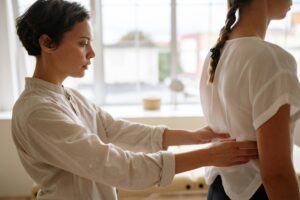
Back, shoulder, and neck massage
-
Marma point therapy (vital energy points)
-
Use of herbal oils and powders
-
Daily supervised massage or Ayurveda therapy practice sessions
-
Therapist posture, body mechanics, and energy awareness
-
Introduction to traditional oil preparation methods
Students practice with peers in a structured environment that encourages learning through experience. Nature exposure, self-observation, and reflective practice are integrated to deepen understanding and therapeutic presence.
Shiro Abhyanga is therapy focuses on the head massage, including scalp, neck, and shoulders to relieve mental stress, insomnia, headaches, and anxiety. Shiro Abhyanga balances the nervous system and improves concentration and emotional stability.
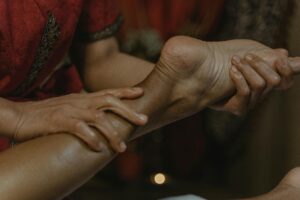
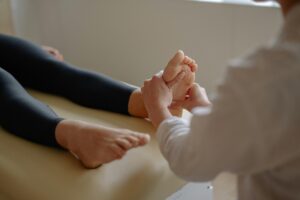
Padabhyanga is therapy with foot massage. It stimulates vital nerve endings and marma points in the feet. It promotes relaxation, improves sleep quality, and supports overall body balance. This therapy teaches students the importance of grounding and energy flow.
Udvartana (Herbal Powder Massage) is a dry or oil-based massage using herbal powders. It helps reduce excess Kapha, improves metabolism, supports weight management, and enhances skin texture. Students learn detoxifying and stimulating massage techniques.
Panchakarma Detox therapy
Panchakarma detox therapy training at Nepal Meditation Home is an essential part of the Ayurveda program. Panchakarma is the classical Ayurvedic system of purification designed to remove accumulated toxins (Ama), restore Dosha balance, and rejuvenate the body and mind. During the training, students are introduced to the philosophy and purpose of Panchakarma, learning how detoxification supports long-term health, disease prevention, and mental clarity. Emphasis is placed on understanding when and how Panchakarma therapies should be applied safely and responsibly.
As part of the hands-on Ayurveda and massage training in Nepal, students learn the preparatory and supportive therapies of Panchakarma, including Abhyanga (oil massage), Swedana (herbal steam), and localized oil treatments. These therapies play a vital role in mobilizing toxins and preparing the body for deeper cleansing processes. Under experienced guidance, participants practice correct techniques, oil selection, pressure, sequencing, and therapist posture, gaining confidence in delivering effective detox support therapies in a professional setting.
During the Ayurveda training at Nepal Meditation Home, the detox component of Panchakarma focuses on introducing students to the experiential understanding of Vamana and Virechana, the two primary internal purification therapies of Ayurveda. These therapies are presented as guided experiential learning, not as compulsory medical procedures. The aim is to help students understand how deep detoxification works in Ayurveda, how toxins (Ama) and aggravated Doshas are eliminated from the body, and how these processes influence physical, emotional, and mental balance. Under careful supervision, eligible participants may choose to experience mild and safe forms of Vamana (therapeutic emesis for Kapha imbalance) or Virechana (therapeutic purgation for Pitta imbalance), depending on individual constitution and condition.
The training emphasizes proper preparation (Purva Karma) and after-care (Paschat Karma) as essential parts of detox therapy. Equal importance is given to post-detox recovery, such as gradual diet progression, rest, grounding practices, and emotional stability, ensuring that detoxification supports healing rather than strain. Vamana and Virechana should always be done under expert guidance and never self-administered. By observing and, where appropriate, experiencing these detox therapies, students gain deep respect for Panchakarma as a powerful healing science. This experiential understanding strengthens their foundation during Ayurveda and massage training in Nepal.
Shirodhara (Oil Flow Therapy)
Shirodhara involves a continuous flow of warm oil on the forehead (Ajna area). It is deeply calming and effective for stress, anxiety, insomnia, and nervous system imbalance. Students learn precision, patience, and rhythm in therapy application. Shirodhara training at Nepal Meditation Home offers a unique opportunity to learn one of the most profound and calming Ayurvedic therapies in an authentic and supportive environment. Shirodhara, the continuous flow of warm herbal oil on the forehead, is deeply effective for calming the nervous system, reducing stress, anxiety, insomnia, and mental fatigue. During the training, students learn the theoretical foundations of Shirodhara, including indications, contraindications, oil selection according to Dosha, and proper preparation of the client and therapy space.
As part of the comprehensive Ayurveda massage training in Nepal, Shirodhara is taught through detailed demonstrations and supervised hands-on practice. Students develop precision, rhythm, and sensitivity while performing the therapy, understanding how subtle adjustments in temperature, flow, and timing influence therapeutic outcomes. This combined approach prepares participants to confidently offer Shirodhara as a professional therapy while embodying the deeper healing principles of Ayurveda.
Marma Therapy (Vital Energy Point Therapy)
Marma therapy works on specific energy points where muscles, nerves, and channels meet. Gentle pressure and oil application help release blocked energy, reduce pain, and restore balance. This therapy deepens therapeutic sensitivity in Ayurveda and massage training in Nepal.
Swedana (Herbal Steam Therapy)
Swedana uses herbal steam to open body channels, release toxins, and reduce stiffness. Often combined with Abhyanga, this therapy enhances detoxification and prepares the body for deeper treatments.
Kati Basti (Lower Back Oil Therapy)
Kati Basti involves retaining warm oil over the lower back using a herbal dough ring. It is effective for back pain, stiffness, and spinal imbalance, and introduces students to localized oil therapies.
Janu Basti (Knee Joint Therapy)
This therapy focuses on nourishing and strengthening the knee joints using warm medicated oil. It is beneficial for joint pain, arthritis, and degeneration, and teaches targeted therapeutic application.
Nasya (Nasal Therapy)
Nasya involves the administration of herbal oils or drops through the nasal passages to cleanse and nourish the head region. It supports respiratory health, sinus relief, and mental clarity, and introduces internal purification concepts.
Sample Daily Schedule
Morning
-
Yoga, meditation, pranayama classes to follow the yogic lifestyle.
-
Herbal tea & silence
Afternoon
-
Some theory of Ayurveda, massage and doctor consultation
-
Practical massage or Ayurveda sessions
-
Massage or Ayurveda therapy technique demonstration
-
Sometime student just experience therapy from Ayurveda Nurse
Evening
-
Meditation or relaxation
-
Self-study or reflection
-
Yoga optional
The schedule is designed to balance learning, practice, and rest. It could be change any time depends on topic, teacher, doctor, therapy, climate, circumstance etc.
Certification
Participants who successfully complete the three weeks Ayurveda and massage training program receive a Certificate of Completion in Ayurveda and Massage Therapy from Nepal Ayurveda Home, reflecting comprehensive training in theory, practice, and self-development.
Today, holistic and complementary therapies such as Ayurvedic Massage Therapy are increasingly recognized worldwide as effective approaches to health maintenance, stress management, and overall well-being. Over the past decade, demand for qualified massage therapists has expanded rapidly across wellness retreats, clinics, spas, and integrative healthcare settings. Graduates of this Ayurveda and Massage Training in Nepal may pursue careers in:
-
Yoga and meditation retreat centers
-
Ayurvedic clinics and wellness resorts
-
Spa and holistic therapy centers
-
Self-employed private practice
-
Contract and international wellness programs
This training empowers students not only with professional skills, but also with a holistic understanding of health, enabling them to serve others with confidence, authenticity, and compassion. Even you do not want to teach this training is good for your health and to support your family and friend.
Looking forward to your warm welcome.
Yours Next Home,
Nepal Meditation Home