
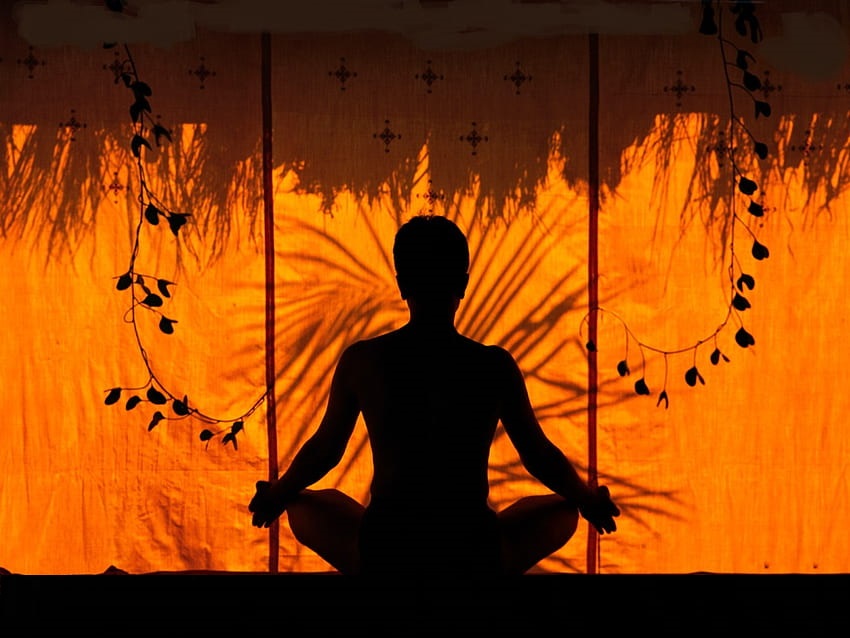
The word “Dynamic Meditation” word describes any tactic of meditation that comprises movement- instances are Sufi mystics’ Sama and Haḍra, the Gurdjieff movements, and the sacred dances also known as the Dynamic Body awareness. These types of practices are also found in Buddhism and Taoism, in Nepal and India. Those are available in Yoga and Tantra, and the Latihan of Subud.
Physical activities are involved in Dynamic meditation. This technique was developed by Osho in the early 1970s. Effort or physical activity is denoted by the term “Dynamic” while meditation is no physical effort or activity. Meditation is the silent, tranquil, and aware state. So this is a dialectical meditation. Nowadays dynamic meditation in Nepal is famous and practiced by people all around the world. In dynamic meditation, a practitioner emerges to meditation through active movement i.e. physical activity. Here, chaos is freely expressed. This is a medium to express yourself with physical activity (sometimes vocally as well). Dynamic meditation in Nepal is a speedy, powerful, and in-depth way to end old, embedded outlines in the body and mind that keep one caged in the bygone time. This gives way to freedom, the witnessing, stillness, and harmony that are veiled behind those jail fences.
Dynamic meditation in Nepal is better if done in the early morning, when “the entire of nature becomes lively, the night has passed away, the sun is rising up and everything becomes mindful and cognizant.” You can do it alone, but to initiate in the group. Though you do it in a group you remain oblivious to others around you. Loose, comfortable clothing is very important. This meditation can be done with its precise Osho Dynamic Meditation music. Dynamic Meditation has five different stages.
Instructions:
The dynamic meditation takes one hour and has five stages. Throughout, keep your eyes closed; if necessary, wear a blindfold.
In order to successfully complete dynamic meditation, you must always be alert, mindful, and aware of everything you do. Be the witness and observe every single activity. And this attentiveness will reach its pinnacle after you have reached the fourth stage where you are fully frozen and inactive.
First Phase: 10 minutes
Breathe rapidly, deeply, and erratically through nostrils. Focus always on the exhale while allowing your breath to be intense, rapid, rhythmless, and patternless. Let the inhalation be handled by the body in its own natural way. The lungs should receive the breath thoroughly. Do this as quickly and forcefully as you can until you hardly breathe. To help you increase your energy, use your natural body movements. Feel it escalating, but keep your grip during the initial phase.
Second Phase: 10 minutes
Burn Up! Throw away everything that has to be discarded. Observe your body. Allow your body to express itself as it wants. Utterly lose it. Throw yourself around and scream, shout, cry, leap, kick, shake, dance, sing, and laugh. Don’t hold anything back, and keep moving the whole time. A little acting may often get you going. Never let your thoughts get in the way of what is going on. Go insane consciously. Be thorough. Explode….
Third Phase: 10 minutes
Jump up and down while raising your arms over your head and yelling the chant “Hoo! Hoo! Hoo!” as loudly as you can. Let the sound pound deeply into the sex core each time you land on the flats of your feet. Give everything you have got; run yourself ragged.
Fourth Stage: 15 minutes
Stop! No matter where you are or how you are positioned, freeze. Make no arrangements for the body. Any movement, cough, or other interruption of the energy flow will cause the effort to be wasted. Ba the observer of everything that occurs to you.
Fifth Stage: 15 minutes
Rejoice, celebrate! Anything may be expressed via dance and music. Keep your dynamism and aliveness with you all day long.
Note:
If you cannot make noise in your meditation space, do this silently. Catharsis can be thrown out in either way by sound or bodily movements. Thus in the second phase of dynamic meditation, you can release your catharsis with physical movement. In the third phase, the chanting Hoo! can be beaten noiselessly inside, and in the fifth phase, an expressive dance is performed.
View of Osho:
Osho wants you to become a spectator in this meditation. Don’t get missing, need to be present all the time. It is highly possible to get lost. While you are breathing you may forget because of old habit patterns: you may become one with the breathing and may forget the witness. This will mislead you. So be the observer while breathing as fast, as deep as possible with your full energy to it. Behold what is going on as if you are just a bystander watching objectively, as if everything is happening to someone other. Here the entire thing is occurring in the body and the mindfulness is just adjusted and viewed.
This perceiving has to be incorporated in all three phases. And when everything is completed by the end of the third step; you have become absolutely quiet, frozen in the fourth step, then this vigilance will come to its uttermost.” It requires time – at least 21 days are required to feel. Within three months some practitioners can move into a separate world of meditation. Everybody can gain a good experience by this time period. It varies from person to person. If your passion and greatness are very high, it can even crop up in three days.
Practice
Since it was difficult for modern people to simply sit down and begin meditating, Osho supposed that catharsis techniques were essential. First, seek the easy and comfortable method to diminish catharsis. Then eventually you can be read for meditation. “I never tell people to begin with just sitting”, he said. You become conscious of a silent point within you when you dance erratically, and you become conscious of craziness when you sit still. His “dialectical” approaches, which incorporate aspects of mantra and pranayama, latihan, kirtan, and psychotherapy catharsis, oscillate between action and passivity.
Also check,